


Android Auto
Google LLC
When I use a phone in the car, I want fewer reasons to touch it, not another screen competing for my attention. That is the basic promise behind Android Auto, Google LLC’s free app for drivers who want navigation, media, messaging, and Google Assistant functions arranged around the journey. I have found it most useful when I prepare the phone before moving, connect it once, and then let the car display handle the tasks that would otherwise pull my eyes toward the handset.
It sits in the Auto & Vehicles category, has an Everyone age rating, and supports devices running Android 9 or later. Its scale is hard to ignore: it has passed ten billion installs, with an average score of 4.1 from roughly six million ratings. Those figures suggest that it has become a familiar part of driving for a very large Android audience, although popularity does not remove the need to check whether a particular phone, vehicle, and connection method work well together.
What using Android Auto feels like behind the wheel
The first thing I notice is the change in priorities. Instead of opening unrelated phone apps, I get a driving-oriented interface built around the information I am likely to need immediately: directions, audio controls, communication, and voice assistance. That makes it a better fit for a commute or a long trip than simply placing the phone in a dashboard holder and using the normal handset interface.
Related News

How Android Auto Merges Tech with Our Driving Lives

How to Make Fortnite Feel Smarter on Mobile

Uber Eats Under Pressure: What Happens When Delivery Goes Wrong
In a typical morning scenario, I connect my phone before leaving, choose a destination, start an audio program, and let the system guide the route. If a message arrives, I can use voice interaction rather than picking up the phone. The value is not that every task becomes effortless; it is that the most common tasks are grouped into a workflow that encourages me to keep the phone out of my hands.
The experience depends heavily on the car. A compatible vehicle display can make the interface feel integrated, while a poor cable, an awkward USB port, or unreliable wireless behavior can turn the first few minutes of a trip into troubleshooting. Android Auto is therefore not just an app I judge in isolation. It is a meeting point between the phone, the car’s infotainment system, the connection, and the apps I choose to use while driving.
Related News

Why WhatsApp Messenger Still Makes Everyday Communication Feel Easy

Jurassic World: The Game Is the Better Dino Tycoon for Strategic Players

Threads in Real Life: Who Should Join, Lurk, or Leave

How SHEIN Turned Shopping Into an Endless Content Feed

Should You Switch to Microsoft Outlook on Mobile?

Why Gallery Keeps Pulling Users Back
Navigation is useful, but preparation still matters
For everyday routes, the navigation side is convenient because directions, voice guidance, and the rest of the driving interface live in the same environment. I especially appreciate being able to begin a trip before pulling away, rather than trying to configure everything at the first traffic light. A good habit is to enter the destination while parked, check the suggested route, and make sure the phone has enough charge before setting off.
I would not treat the display as a substitute for common sense. Road layouts change, signals can be imperfect, and a suggested route may not match my preference for avoiding tolls, difficult turns, or unfamiliar narrow roads. The safer approach is to use the guidance as assistance, listen to the spoken instructions, and stop somewhere safe if I need to make a complicated change.
One less obvious advantage is that the car interface creates a boundary between driving information and the rest of the phone. I am less tempted to browse unrelated notifications when the handset is mounted or stored away. That separation is valuable for drivers who know that a quick glance at one message can easily become several minutes of distracted use.
Gallery
Messages and voice control require deliberate habits
Voice interaction is where the app can feel most helpful, but also where I need to be realistic. Speaking a short reply or asking for a route change is less disruptive than typing. Long, emotional, or ambiguous messages are different. Even if the system can process them, I prefer to wait until I am parked because correcting a misunderstood voice command while moving defeats the point of a safer driving workflow.
I also think carefully about message previews and spoken content when other people are in the car. A notification that is convenient when I am alone may be uncomfortable with passengers present. This is one of the practical trust questions that is easy to overlook: the car screen is visible, the audio is audible, and the driver remains responsible for deciding what should be read aloud.
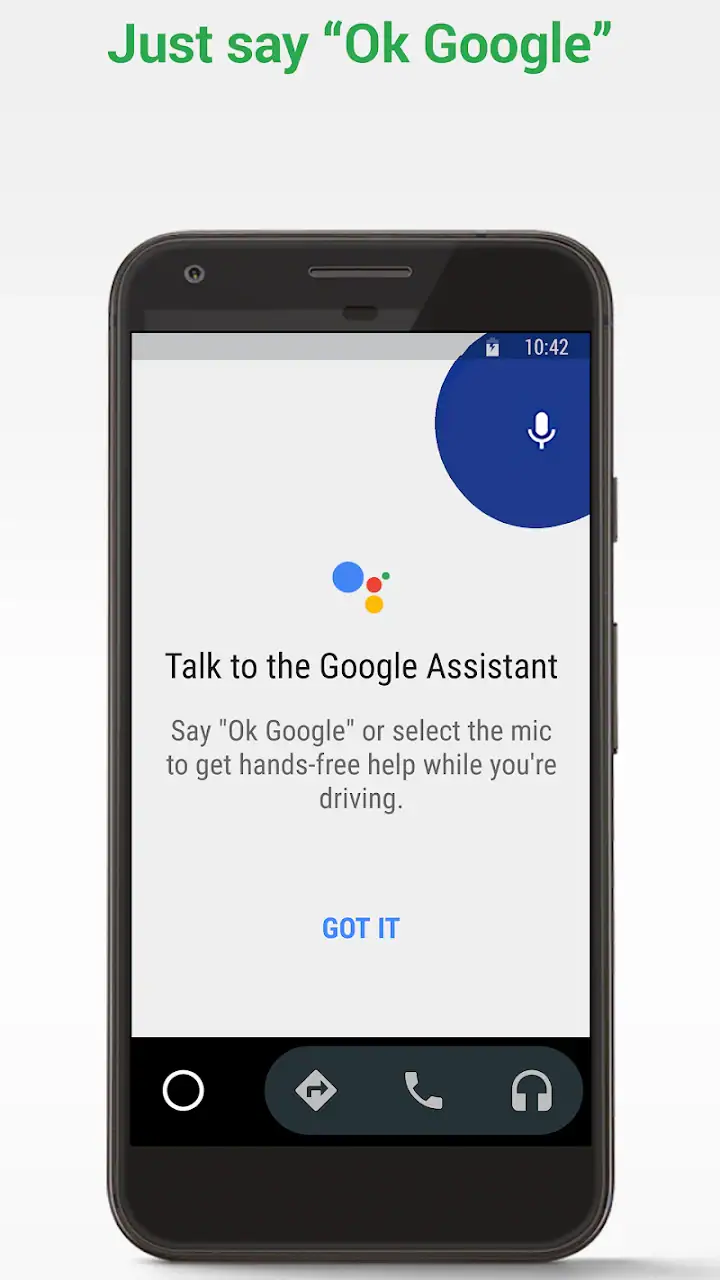
Google Assistant can reduce the need to navigate menus, but it does not remove the need to phrase requests clearly. Background noise, accents, music, and passengers can affect recognition. I get the best results when I use short commands, pause between actions, and avoid treating voice control like a conversation that can safely continue while traffic demands my full attention.
Media control is convenient, with a small trade-off
Audio is another strong use case. Switching between available media choices from the vehicle interface is easier than unlocking the phone and searching through a full app. For a long drive, that means I can keep the journey moving without handling the handset every time I want to change what I am listening to.
The trade-off is that a simplified car interface may expose fewer controls than the phone version of a media app. That is usually a good design choice while driving, but it can frustrate someone who wants to browse deeply, manage a large library, or adjust a detailed setting. I see this as a deliberate limitation rather than a flaw: fewer choices at the moment of driving can mean fewer distractions.
For that reason, I recommend preparing playlists, podcasts, or saved listening before departure. The more decisions I make while parked, the more Android Auto can remain a control surface instead of becoming a second entertainment device that needs constant attention.
Trust starts with the connection and the account
Because Google LLC develops the app, many Android users will already have an account and a phone environment connected to Google services. That can make setup feel familiar, but familiarity should not be confused with automatic comfort. I still want to know which account is active, which phone is connected, and what the car might display when another person uses the vehicle.
The most sensible first step is to review the phone’s Android settings and the app choices that appear during setup. I pay attention to prompts instead of accepting them mechanically, especially when the phone is being paired with a family car or a vehicle that other drivers may use. A shared car deserves the same care as a shared tablet: personal destinations, messages, and contacts should not appear casually on someone else’s screen.
Android Auto is free, which removes a financial barrier, but the overall experience can still involve practical costs such as a compatible vehicle system, a suitable cable, or a phone that handles the workload comfortably. Free does not mean frictionless. I judge it by whether the convenience is worth the setup effort for my own vehicle, not simply by the absence of a download charge.
Visible choices are more useful than assumptions
When I evaluate a connected driving app, I prefer controls I can see and change over vague promises. With Android Auto, I would review notification behavior, connected-device settings, Assistant preferences, and the apps allowed to appear in the driving interface. The exact options can vary with the phone and system configuration, so I treat the settings screen as the source of truth for my device.
This matters most when the car is used by more than one person. Before lending the vehicle, I would disconnect my phone or check the connected-device list. After borrowing a car, I would avoid leaving my account paired simply because the connection was convenient. These are small actions, but they give me more control over what remains available the next time the ignition is turned on.
I also avoid testing unfamiliar commands in traffic. A parked setup session is the right time to decide whether spoken notifications, Assistant responses, or automatic connection behavior suit me. Once those choices are made, I can drive with fewer surprises and a clearer idea of what the system will expose through the dashboard.
Data-sensitive moments happen in ordinary situations
The most sensitive moments are not necessarily dramatic. They happen when a route reveals where I am going, when a message is spoken aloud, when a contact name appears on the vehicle display, or when a passenger sees a destination suggestion. Navigation and communication are personal even when the interface looks simple.
That is why I would not connect my phone to an unfamiliar rental or loaner car without thinking through the consequences. A temporary connection may be useful, but I would be careful about leaving the device paired after the trip. I would also check the car’s own connection menu before handing the vehicle back, rather than assuming that unplugging the cable removes every association.
At home, the same issue appears in a different form. If several people share one vehicle, a driver may want convenience while another may want privacy. The best compromise is not to hide the entire system, but to review the visible notification and account choices for each person’s phone. That keeps the decision with the user instead of allowing the car to become an accidental broadcast point.
I do not regard the dashboard as a private phone screen. It is positioned for the driver, but passengers can often see it and hear it. My rule is simple: if a message or destination would be uncomfortable when spoken in front of the people in the car, I wait until I am parked or change the relevant notification behavior first.
Where it beats the usual alternatives
Compared with using the phone alone in a holder, Android Auto gives me a larger, more vehicle-oriented control environment and makes voice interaction easier to incorporate into the trip. The phone-only approach can be cheaper and simpler for occasional navigation, but it leaves more temptation to interact with a general-purpose screen. It also depends more on the quality and placement of the mount.
Compared with a car manufacturer’s built-in interface, Android Auto can be more familiar when I frequently change vehicles or already rely on Android services. The manufacturer system may still be better for vehicle-specific controls, radio functions, camera views, or settings tied directly to the car. I do not see Android Auto as a complete replacement for the car’s own software; I see it as a useful layer for phone-based navigation, communication, and media.
Compared with another mobile platform’s in-car system, the deciding factor is usually the phone I already use. Switching ecosystems solely for the dashboard would be excessive for most people. Android Auto makes the most sense when my phone, account, and preferred apps already belong to the Android environment.
There is also a strong case for skipping it. If I rarely drive, dislike connected services, use a vehicle with an unreliable display, or prefer a basic offline setup, a sturdy phone mount and preplanned directions may be less troublesome. Someone who wants deep control over every vehicle function may also be happier with the manufacturer’s interface.
Practical setup habits that prevent frustration
I would begin by checking compatibility between the phone and the vehicle before planning a long journey around the app. Then I would connect while parked, grant only the access I understand, and test navigation, audio, and voice commands on a short familiar route. A short test exposes cable or pairing problems without adding pressure to an important trip.
If the connection fails, I would troubleshoot in a calm order: confirm the phone is unlocked when required during setup, inspect the cable and ports, check whether the vehicle is connected to the intended phone, and restart the connection before changing many settings at once. Randomly toggling options makes it harder to know what solved the problem.
Another useful habit is keeping the phone accessible for emergencies but not positioned as the main screen. I place it where it will not become a second source of notifications or tempt me to bypass the car interface. The goal is not to make the phone disappear completely; it is to make deliberate interaction the exception.
For longer journeys, I prepare more than the destination. I select audio in advance, tell close contacts that I may not respond immediately, and make sure the car’s volume is comfortable before joining busy roads. These steps sound ordinary, but they prevent the app from becoming a reason to fiddle with the dashboard every few minutes.
Who will appreciate it most
I recommend Android Auto most strongly to Android phone owners who drive regularly and have a compatible vehicle display. It is particularly suitable for commuters, families sharing navigation duties, and drivers who want their common audio and messaging tasks available without handling the phone.
It is also useful for people who want a consistent experience when moving between different cars. The interface may feel more familiar than learning each manufacturer’s phone integration from scratch. That consistency is valuable, although it should not be mistaken for identical behavior across every vehicle or phone.
I am more cautious about recommending it to someone who expects perfect voice recognition, instant wireless pairing, or access to every phone feature on the dashboard. The driving interface is intentionally narrower than the phone, and the connection can be the weakest part of the experience. Anyone who dislikes troubleshooting should test it thoroughly before depending on it for an important trip.
The Everyone rating makes it broadly suitable from an age-classification perspective, but younger passengers and new drivers still need clear household rules. The rating does not decide whether a person is ready to manage navigation, messages, or voice commands responsibly while driving. Safe use depends on behavior and supervision, not just the label.
My cautious verdict after weighing convenience and control
Android Auto succeeds because it focuses the Android phone on the few services that make sense in a moving car. I find its greatest strength in the transition from a general-purpose handset to a simpler driving companion: directions are easier to follow, media is easier to control, and short communication tasks can be handled with less physical interaction.
Its weaknesses are equally practical. Compatibility, pairing, cables, account choices, and notification behavior all matter. The system can reduce distraction, but it cannot guarantee attentive driving, and voice control is not a license to hold a complicated conversation with the car while traffic becomes demanding.
With a free price and support for Android 9 and newer, it is an easy app to try if the phone and vehicle are suitable. It was released in March 2015 and has matured into a widely used driving tool, but I would still judge it through my own setup rather than its reputation or large user base.
My recommendation is to install it, configure it while parked, review the account and notification choices, and test it on familiar roads. If that trial gives me a stable connection and a calmer way to manage navigation, audio, and messages, it earns a place in my daily driving routine. If it creates more pairing problems than convenience, the car’s native system or a simple phone mount may be the better answer. The right choice is the one that keeps useful information available while leaving my attention on the road.
FAQs for Android Auto
What is Android Auto and how does it enhance my driving experience?
Android Auto is a mobile app developed by Google that mirrors features from an Android device to a car's dashboard infotainment system. It enhances driving by providing hands-free access to navigation, calls, messages, and music, ensuring drivers remain focused on the road while still utilizing essential smartphone functionalities.
Is my car compatible with Android Auto?
To use Android Auto, your car must be compatible with it. Most vehicles manufactured after 2016 support the app, but it's always best to check with your car manufacturer or on the Android Auto website. Alternatively, you can use the app on your phone screen if your car doesn't support it directly.
What apps can I use with Android Auto?
Android Auto supports a wide range of apps, including popular ones like Google Maps, Waze, Spotify, Audible, and WhatsApp. New apps are continually being added, ensuring you have access to navigation, music, messaging, and more, all optimized for safe use while driving.
Do I need a data connection to use Android Auto?
Yes, an active data connection is generally required for Android Auto, especially for real-time navigation, streaming services, and updating apps. However, some features, like playing downloaded music or pre-downloaded maps, can work offline to a limited extent.
How do I set up Android Auto in my car?
Setting up Android Auto is straightforward. First, ensure your phone is running Android 6.0 or higher and download the Android Auto app from the Google Play Store. Connect your phone to your car using a USB cable, follow the on-screen prompts, and grant necessary permissions to start using Android Auto seamlessly.
Pros
- Seamless integration with car systems.
- Voice commands enhance safety.
- Supports a wide range of apps.
- User-friendly interface.
- Frequent updates improve functionality.
Cons
- Limited app compatibility.
- Requires a constant internet connection.
- Voice recognition can be inaccurate.
- Some features require paid apps.
- May consume significant phone battery.


